
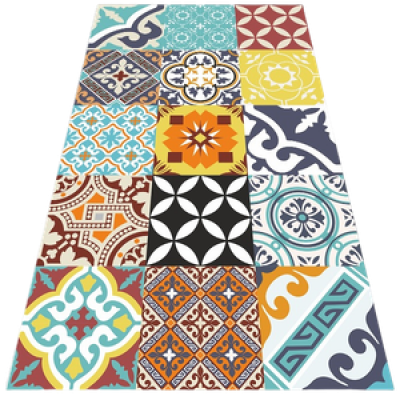






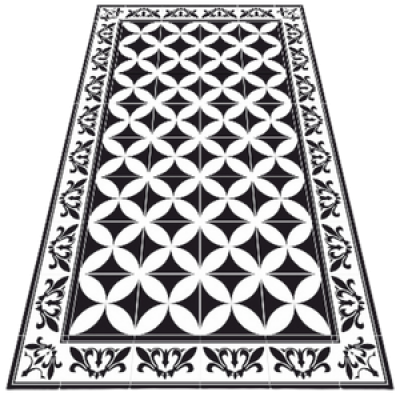















































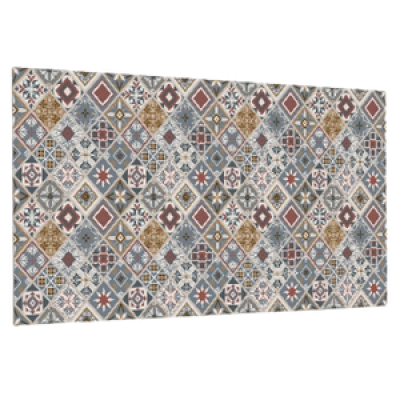




In the kitchen, walls and floors come into contact with steam, grease, water, crumbs, moving chairs, detergents, and the household’s daily traffic, so it’s no surprise that many people, before a renovation, ask themselves: are self-adhesive panels suitable for the kitchen? The answer is: yes, provided you choose the right products, properly prepare the surfaces, and match the material to the installation area.
In recent years, vinyl panels have become a very popular choice not only for floors but also as decorative wall finishes. They are modern, practical, available in various designs, and allow you to transform the interior without a full renovation. Self-adhesive vinyl panels are particularly popular because they combine an attractive appearance with convenient installation.
Self-adhesive panels in the kitchen - is it really a good idea?
Generally speaking, self-adhesive vinyl panels can be a very good solution for the kitchen. Their biggest advantage is that they let you quickly refresh the interior, cover old tiles, change the character of the arrangement, and achieve the effect of a new surface without chiseling, dust, and hiring professionals.
Well-chosen vinyl panels for the kitchen work especially well where ease of installation, resistance to dirt, and ease of cleaning are important. The kitchen requires materials that are practical, aesthetic, and resistant to everyday use. That’s why it’s so important not to choose random decorative panels, but products intended for rooms exposed to moisture and frequent dirt.
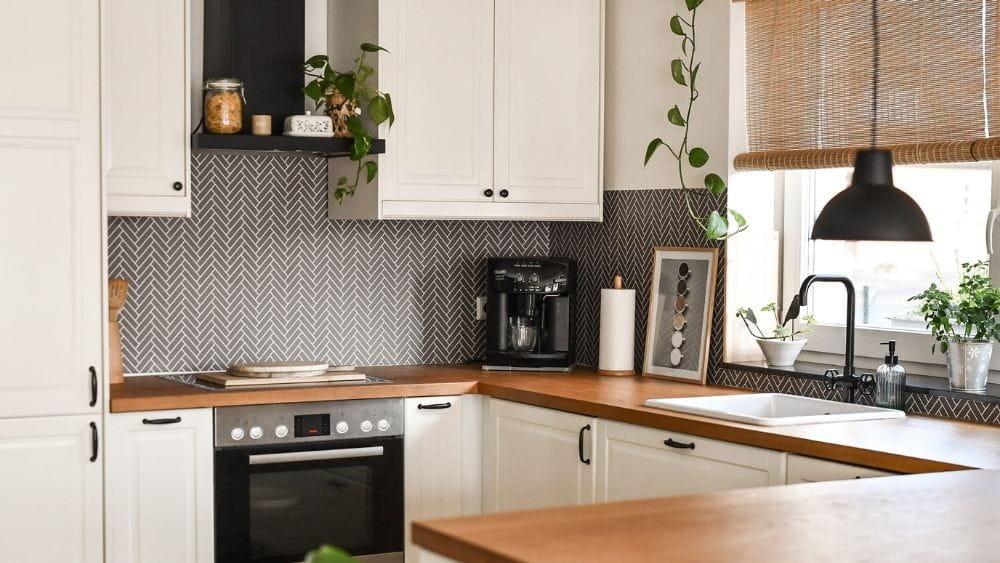
It’s worth remembering that vinyl panels are suitable for both modern and more classic arrangements. They can be used in minimalist, Scandinavian, loft, rustic, or classic-style kitchens. This makes it easy to match them to the color of the cabinets, countertop, accessories, and lighting.
What are self-adhesive vinyl panels?
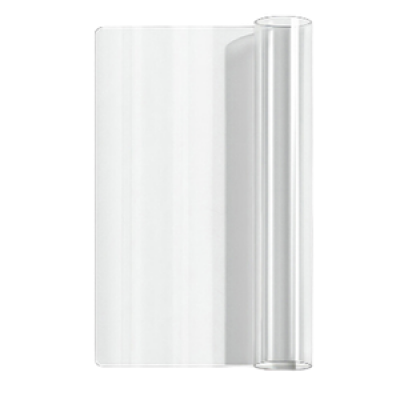
Self-adhesive vinyl panels are claddings made of vinyl, a material distinguished by its flexibility, durability, and practical applications. On the underside they have an adhesive layer protected with a film. After removing it, the panel is applied directly to the prepared surface. There’s no need for additional adhesives, grout, or complicated tools.
Such panels can imitate natural wood, stone, concrete, marble, brick, or classic tiles. Vinyl tiles are also available on the market; they resemble ceramic tiles in appearance but are lighter, easier to install, and more pleasant in everyday use.
Their big advantage is easy installation. In many cases, basic tools are sufficient, such as a tape measure, pencil, level, utility knife, and a roller or soft cloth for pressing the panels. Thanks to this, you can do the installation yourself without a long renovation.
Vinyl panels for the wall - will they work above the countertop?
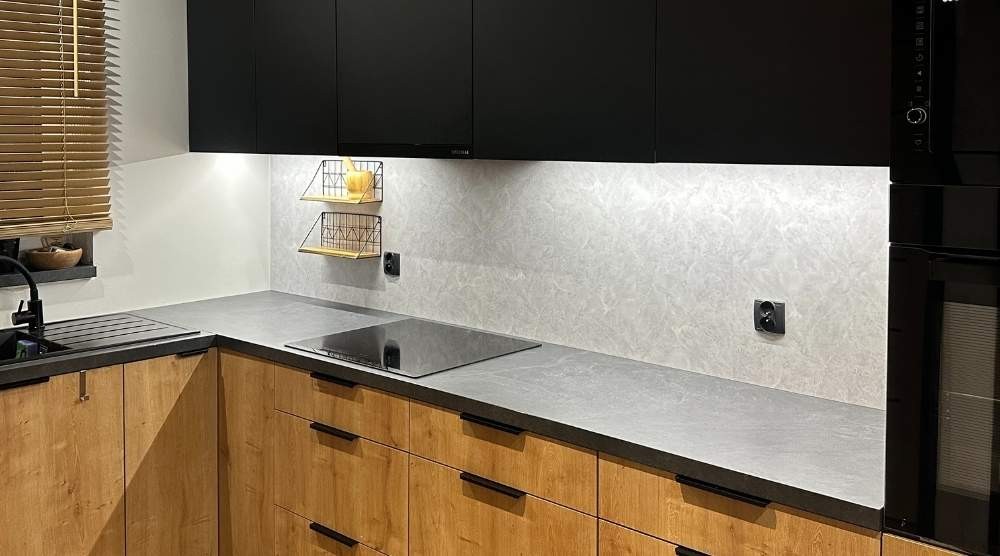
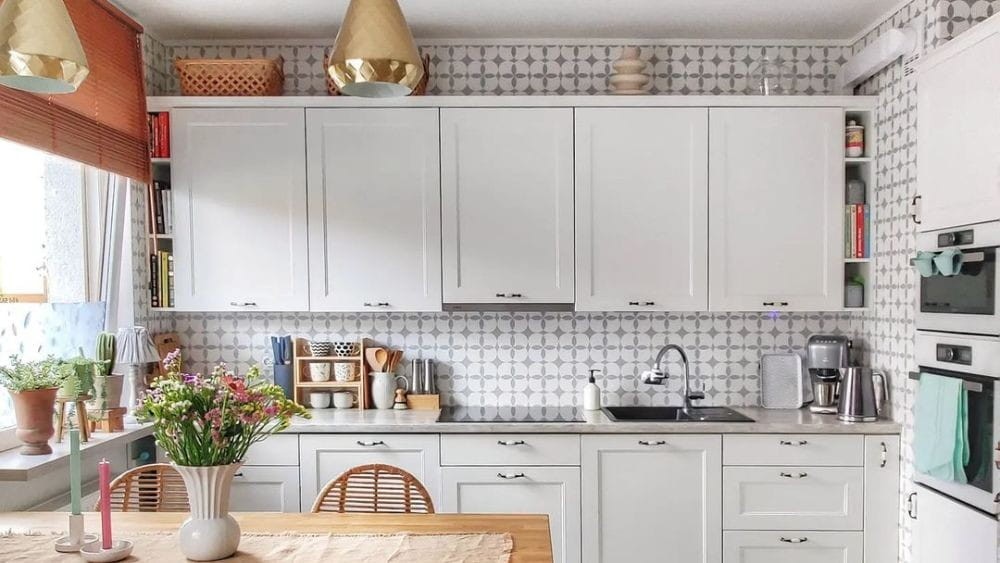
One of the most common applications is vinyl panels on the wall, especially in the space between the countertop and the upper cabinets. This area strongly influences the character of the entire kitchen. Even a small change to this surface can make the interior look stylish, fresh, and more modern.
Panels will work well above the countertop if they have adequate resistance to dirt and moisture. This zone is exposed to steam, grease, water droplets, and food residue, so the surface should be easy to wipe. In practice, a damp cloth often suffices to remove fresh dirt, and for larger stains a bit of mild detergent can be used.
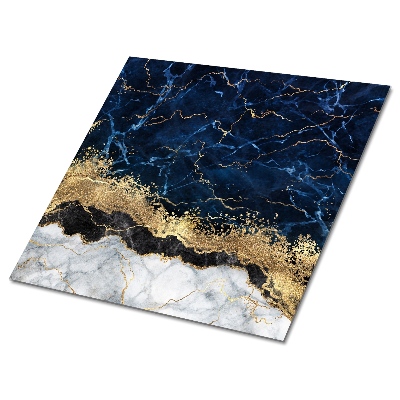
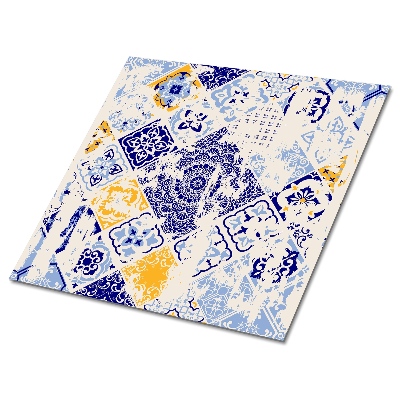
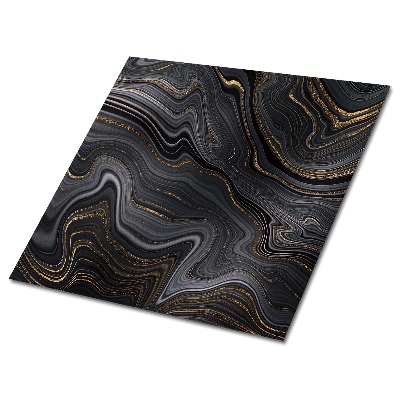
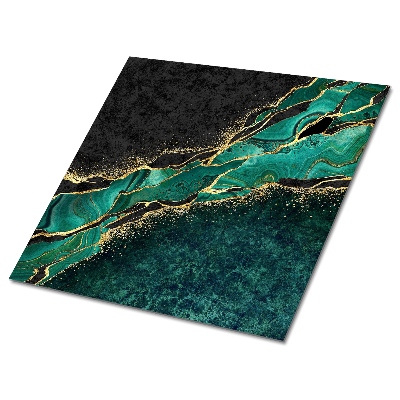
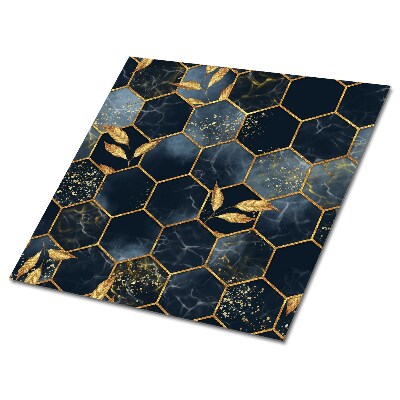
However, caution is necessary around the stove. If the panels will be very close to a high-temperature source, you need to check the manufacturer’s recommendations. Not every material tolerates direct heat well. Near a gas cooktop or a heavily used cooking zone, it’s better to choose solutions with increased heat resistance or protect the section of wall with a glass shield.
Are vinyl panels suitable for the kitchen floor?
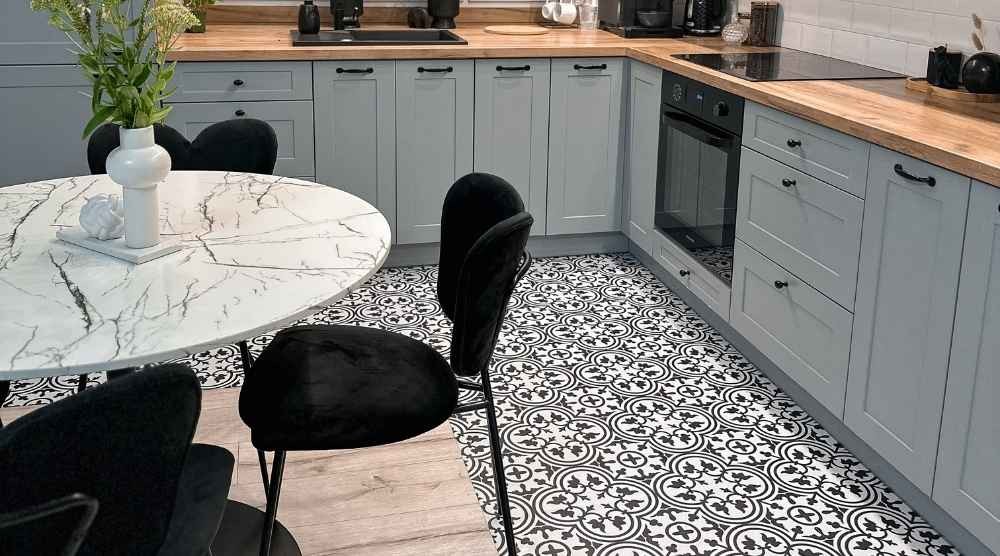
Yes, vinyl floors are one of the more practical choices for a kitchen. Good-quality vinyl stands out for its resistance to everyday use, moisture, and dirt. Compared to many other types of flooring, it’s quieter, warmer to the touch, and more flexible. That’s important because the kitchen is a place where we often stand for a long time at the countertop, sink, or stove.
Vinyl increases walking comfort because it isn’t as hard and cold as traditional ceramic tiles. For many people that’s a huge difference, especially in the morning or during cooler months. Modern vinyl floors can very convincingly imitate wood, concrete, or stone while maintaining high functionality.
It’s worth choosing the right vinyl panels with an appropriate wear class and wear-layer thickness. The kitchen is exposed to intensive use, so the material should be durable and less susceptible to scratches, stains, and mechanical damage.
Vinyl panels and underfloor heating
Many people ask, can vinyl panels be used over underfloor heating. In many cases yes, but you must check the specifications of the specific product. Not all panels are designed for such use. If the manufacturer permits installation over underfloor heating, vinyl can be a very comfortable solution for the kitchen.
Properly selected panels conduct heat sufficiently for everyday use, and their surface feels pleasant underfoot. This makes the kitchen more functional and cozy. In this case, proper installation of the vinyl panels, correct surface preparation, and adhering to the recommended operating temperatures for the heating are especially important.
Vinyl panels or ceramic tiles – which is better for the kitchen?
Ceramic tiles have been a classic kitchen choice for years. They’re durable, resistant to moisture and high temperatures, and easy to keep clean. However, they have their limitations. Installation is more time-consuming, requires adhesive, grouting, and often a professional installer. They’re also hard and cold to the touch.
By contrast, vinyl tiles and panels offer greater design freedom with less effort. They’re an excellent choice for people who want to quickly transform the kitchen, aren’t planning a major renovation, or want to cover old tiles without chiseling them off. Additionally, vinyl is more comfortable underfoot and can dampen sound better.
If maximum resistance to high temperatures right next to the stove is your priority, ceramic tiles may still be the safer choice. If, however, your priority is a quick makeover, aesthetics, convenience, and simple installation, self-adhesive vinyl panels may prove to be the ideal solution.
Which panels should you choose for the kitchen?
For the kitchen, it’s best to choose materials that combine durability, resistance, and an attractive look. Modern vinyl panels come in a wide range of colors, textures, and formats, so they can be matched to almost any interior.
For lovers of warm arrangements, a pattern imitating wood or natural wood will be a great choice. Such a decor warms up the kitchen and pairs well with white, beige, gray, black, and green.
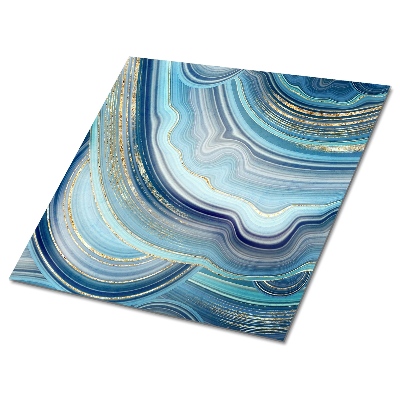
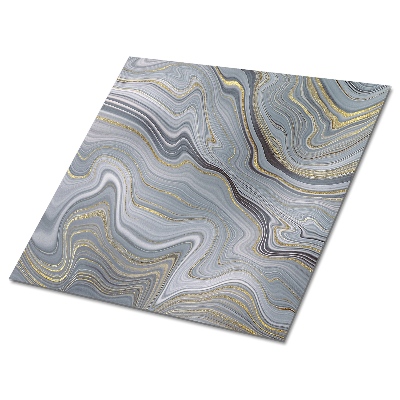
For modern interiors, panels imitating concrete, stone, or marble are a good fit. In classic kitchens, patterns resembling tiles, mosaics, or delicate ornaments work well.
When choosing panels, pay attention to their resistance, intended use, thickness, surface texture, and installation method. Good products should retain their aesthetic appearance for a long time, be easy to maintain, and resist typical kitchen dirt.
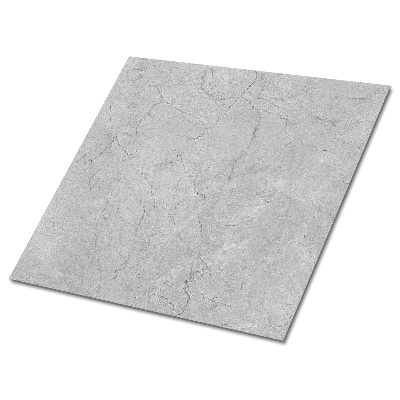
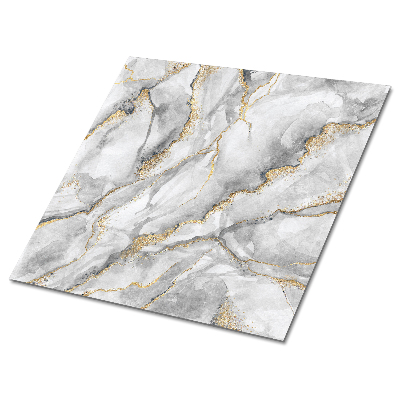
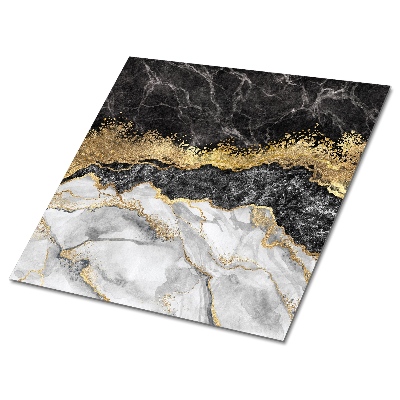
Installing vinyl panels in the kitchen - how to prepare the surface?
Proper installation of vinyl panels starts with preparing the surface. This is the most important stage and shouldn’t be skipped. Even the best panels won’t adhere well to a wall or floor if the surface is dirty, greasy, damp, or uneven.
The surface should be dry, vacuumed, degreased, and stable. Ideally, it should be smooth, without cracks, loose paint, or noticeable voids. On uneven surfaces, the panels may peel, ripple, or lay unevenly. For larger voids, it’s worth leveling the wall or floor beforehand.
If you want to stick panels over old tiles, make sure they adhere well to the substrate, don’t move, and are thoroughly degreased. Grout lines and larger irregularities can show through thin panels, so using a leveling compound is sometimes necessary. The better you prepare the surfaces, the more durable the result will be.
Is installing self-adhesive panels difficult?
One of the biggest advantages of self-adhesive panels is the ease of installation. There’s no need to mix mortar, apply adhesive, cut ceramic tiles with a specialized machine, or wait for grout to dry. You just need to plan the layout, cut the panel to size, remove the protective layer, and stick it to the surface.
Of course, precision matters. Before starting work, it’s worth carefully measuring the wall or floor and planning the pattern layout. This is especially important with panels that imitate tiles, brick, or geometric patterns. This way, the whole will look even and professional.
For people who enjoy DIY changes at home, self-adhesive panels are an ideal choice. They allow for a quick kitchen makeover without a large budget and without hiring a renovation crew.
Cleaning vinyl panels in the kitchen
The kitchen must be easy to keep clean. That’s why cleaning vinyl panels shouldn’t be considered a complicated chore. In most cases, dirt can be easily removed with a soft cloth and warm water. Mild cleaning agents work well for greasy stains.
It’s best to avoid stiff brushes, scouring pads, and highly caustic cleaners. They can damage the surface or weaken the finish of the panels. Regularly wiping the surface helps maintain its aesthetic appearance and extends the material’s durability.
A major advantage of vinyl is its ease of cleaning, which matters greatly in the kitchen. Systematic care is enough to keep panels looking fresh and neat for a long time.
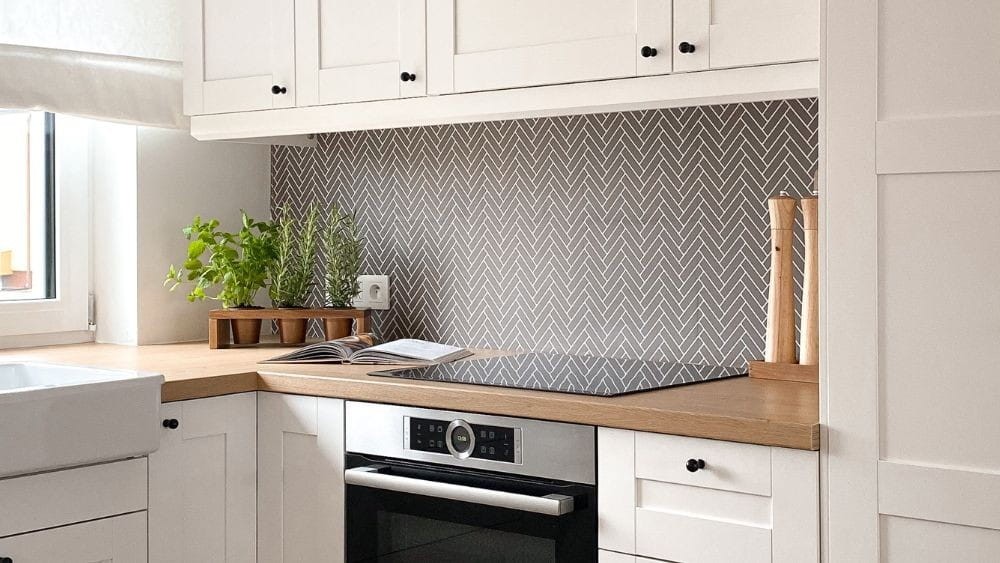
Advantages of self-adhesive panels in the kitchen
Self-adhesive panels have many advantages that make them increasingly popular for apartments and houses.
They let you quickly transform the kitchen - there’s no need to organize a major renovation, move out all the furniture, or spend days dealing with dust and noise.
A wide range of designs - you can choose imitations of wood, stone, concrete, marble, brick, or classic tiles. Thanks to this, it’s easy to match panels to the decor in any room, not only the kitchen, but also the entryway, living room, closet, or bathroom, if the product is designed for that.
Functionality - good vinyl panels are durable, moisture-resistant, easy to maintain, and comfortable to use. Installation is quick, and the result is often visible after just a few hours of work. Compared to a more demanding renovation, that’s a really big difference.
Disadvantages and limitations to be aware of
Despite many advantages, self-adhesive panels aren’t a perfect solution in every situation. Product quality and the condition of the surface matter most. On crooked, dusty, greasy, or damp walls, panels may not adhere for long.
Keep in mind that not all materials are resistant to very high temperatures. In the zone directly next to the stove, caution is advised. If the kitchen is heavily used, it’s worth choosing products with increased resistance to abrasion, stains, and mechanical damage.
It’s also worth avoiding the cheapest panels of unknown origin. A low price may go hand in hand with weaker adhesive, a thinner wear layer, and lower durability. It’s better to choose panels with proven parameters that offer high quality and will look good for a longer time.
Where else can vinyl panels be used?
Although the topic is the kitchen, it’s worth knowing that vinyl panels can also be used in other parts of the home. They work great in the entryway, where the floor is exposed to sand, mud, and moisture. They can be a good solution for a closet, home office, living room, and—with appropriate specifications—also for a bathroom.
Vinyl wall panels can be used as a decorative backdrop behind a table, behind a TV, by a vanity, or on a section of wall in the hall. It’s a quick way to make a striking change without an expensive renovation.
Because they come in different designs, it’s easy to create a cohesive arrangement throughout the home. You can choose one main motif or combine several textures, for example, wood with concrete or stone with smooth cabinet fronts.
How to maintain the durability of panels in the kitchen?
To keep panels durable and looking good, follow a few simple rules.
Remove dirt regularly, don’t let water sit for a long time, and avoid aggressive cleaners. It’s best to wipe the surface with a soft cloth using mild detergents.
On the floor, it’s worth using chair pads and protectors under heavy furniture. This reduces the risk of scratches. Although good panels are resistant to intensive use, every surface fares better with proper care.
For wall panels, it’s also important to protect the edges, especially in areas exposed to water. Careful installation and firmly pressing the panels improve their durability and the final appearance.
Is it worth choosing self-adhesive panels for the kitchen?
Are self-adhesive panels suitable for the kitchen? Yes, if they’re well matched to the conditions in this room. They’re a practical, aesthetic, and convenient solution for those who want to quickly refresh the interior without an expensive renovation. They work both on the wall above the countertop and on the floor, provided you choose products resistant to moisture, dirt, and everyday use.
If you dream of a kitchen that looks stylish, is easy to keep clean, and doesn’t require a full renovation, self-adhesive panels can be a really good direction. Just choose the right product, prepare the surface, and take a bit of time for careful installation. The effect can be surprising—in a very positive way.